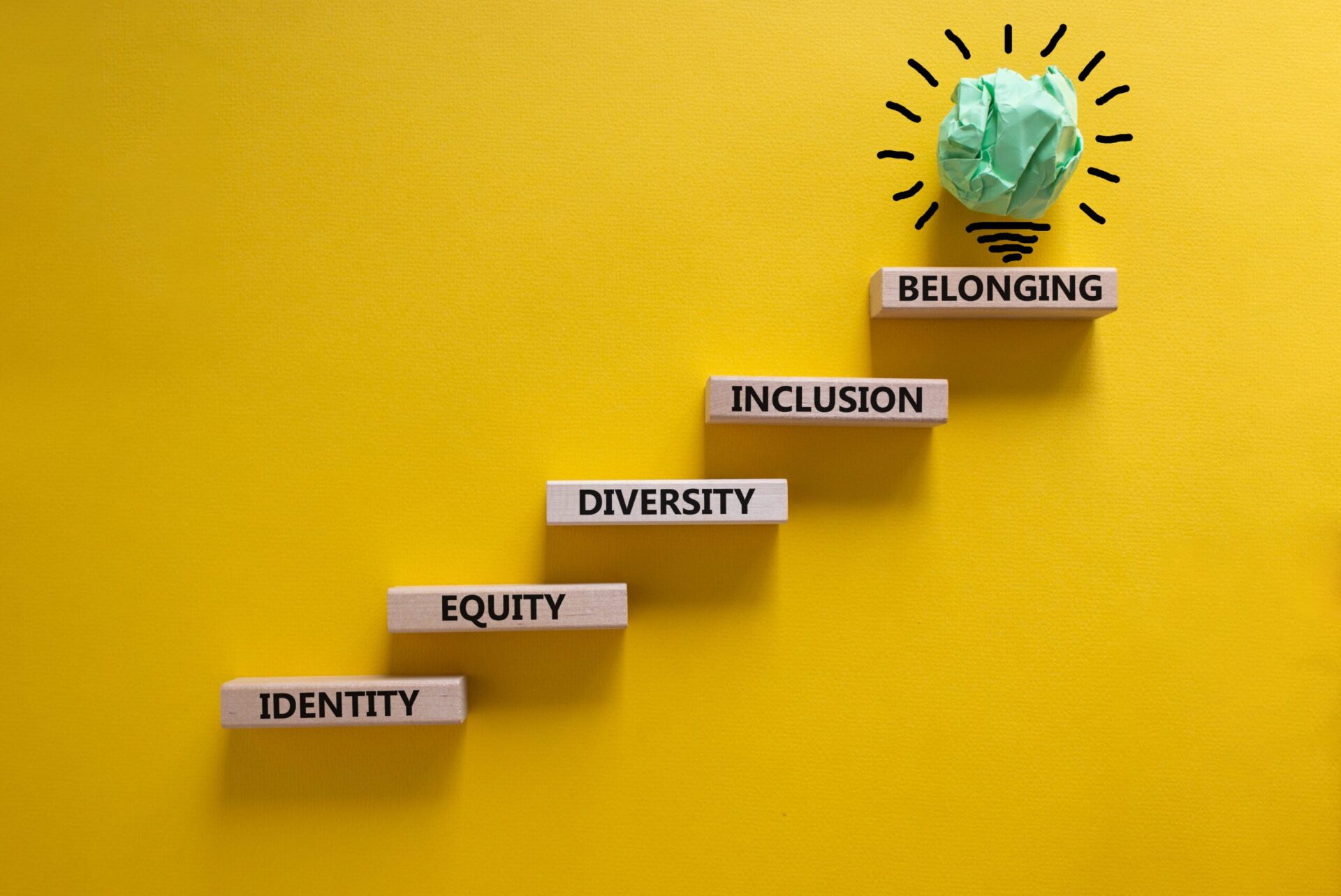
Creating inclusive content is an ongoing, intentional effort in a commitment to fairness. But it’s a territory that some of us don’t understand completely, making us want to tread lightly.
And thanks to unpleasant comments online, some business owners are less likely to embrace inclusive content — whether it’s written word, photography, or an accessible website.
But to create a brand image that is inclusive, it’s important to understand why inclusiveness is important — and what it is, as some may not have a full understanding of inclusive content.
Like other business efforts, bumps in the road may be encountered. But that doesn’t mean the effort shouldn’t be embraced.
Inclusive vs. Diverse
Although the words sound similar, the meanings are not the same. Inclusive refers to behavior and social norms that ensure individuals feel welcome. Whereas diverse refers to traits and characteristics that make us unique.
Both are equally as important and should be embraced in campaigns for a positive brand image.
Diverse Imagery
A picture is worth a thousand words — and those words can vary, depending on if the audience feels represented.
In a publication by the Association for Career & Technical Education the lack of diversity sends a message to the audience that it can cause students they do not belong in a particular field.
This thought can be applied to other industries as well, not just education.
When people see themselves or family dynamic represented in images or videos, it gives the impression that someone like them is already involved — and they could be, too.
Content can be made inclusive by using images or videos featuring people from a variety of cultures, backgrounds, family dynamic, and abilities.
Diverse imagery can be as obvious or as subtle as you desire for the brand — although subtle tends to be better as it looks more natural, like the brand isn’t trying so hard. While comparing these images side-by-side, the composition tells a very similar story. Two adults checking the stock market on their cellphone, but with a notable difference.
Using an image that shows a person of color tells the same story but represents a group that may be underrepresented or misrepresented at times.
This isn’t to say using the other image would be wrong, but simply suggesting branching out from the norm.
Inclusive Writing
Written content depends on three basic factors: language, references, and formatting.
Inclusive Language
Inclusive language is more than utilizing pronouns — although that is incredibly important.
Written content that is truly inclusive creates a sense of community and belonging, while reducing the chances of harming the audience members consuming and interacting with the content.
References made, how it’s phrased, and colloquialisms can have more of an impact than we may think.
And unless it’s absolutely necessary, it’s best to avoid gendered language. Mailman should be changed to letter carrier, and businesswoman can be changed to businessperson or business owner.
Similarly, it’s important to be careful of idioms that can viewed as hurtful or exclusionary. It can be as simple as changing a call-to-action (CTA) from “see what we mean” to “discover how it can help you” when referring to a product or service.
The use of “see” excludes people with an associated disability but is using a screen reader to access the content.
Small changes like these can make all the difference to your audience.
Diverse References
If you grew up in the United States, or have been here for a number of years, the phrase Turkey Trot might ring a few bells as you understand it to refer to a 5k marathon that happens on or around Thanksgiving.
Although it’s a small reference, it might be one that some audience members find to be unfamiliar. If the reference cannot be avoided, it is ideal to give a brief description of the example — much as I did above.
Accessible Writing & Formatting
Inclusive writing has many meanings, one of which being how it is formatted to ensure it is accessible to as many people as possible.
Ideally, articles and page copy should be easy to skim as it can make a significant difference for those with dyslexia, attention-deficit/hyperactive disorder (ADHD), and many others. But, moreover, it is recommended as a reading comprehension technique and ideal for search engine optimization.
To make it easier for readers, formatting techniques like bulleted lists, concise headers, chunks of text, block quotes, among others.
Some typeface is also more accessible than others due to a variety of factors like spacing, letter similarity, and alignment. Slab serif and San serif fonts tend to balance these factors in a delicate way to create a font that is easy to read, but can also create a memorable logo.
Accessible Website
A major part of a well-designed website is ensuring it is accessible to as many people as possible. This includes the navigation, text, imagery, and everything in between.
Inclusive writing efforts won’t be nearly as impactful if the website prevents members of the audience from reading it.
An accessible website should take the following into account:
- Include Alt Text: Screen readers rely on alt text to describe visual content such as images.
- Add Captions: Videos included on the website should include captions to assist those who may be deaf, hard of hearing, or experiences sensory overload.
- Motion Design Elements: Although beautiful, it can be distracting or harmful to those with photosensitivity, epilepsy, or a vestibular disorder.
- Color Contrast: This is the difference between foreground and background colors. For accessibility purposes, it is ideal to ensure the text is easy to read.
It’s also important to avoid relying on color as the only way to convey information, like links. Removing the underline but leaving the blue color can cause a person to miss the link as colors can be interpreted differently.
As more content is created for your brand, it’s important to keep these basic principles in mind. But keep in mind that inclusive content is not designed to make everyone fall in love with your brand or what the company has to offer.
Instead, inclusivity shows the willingness to be open and accepting of those from different backgrounds or abilities than that of your own.
If this is something you need help achieving for your company, let us know. We’ll be happy to put together and implement a tailored strategy designed for success.