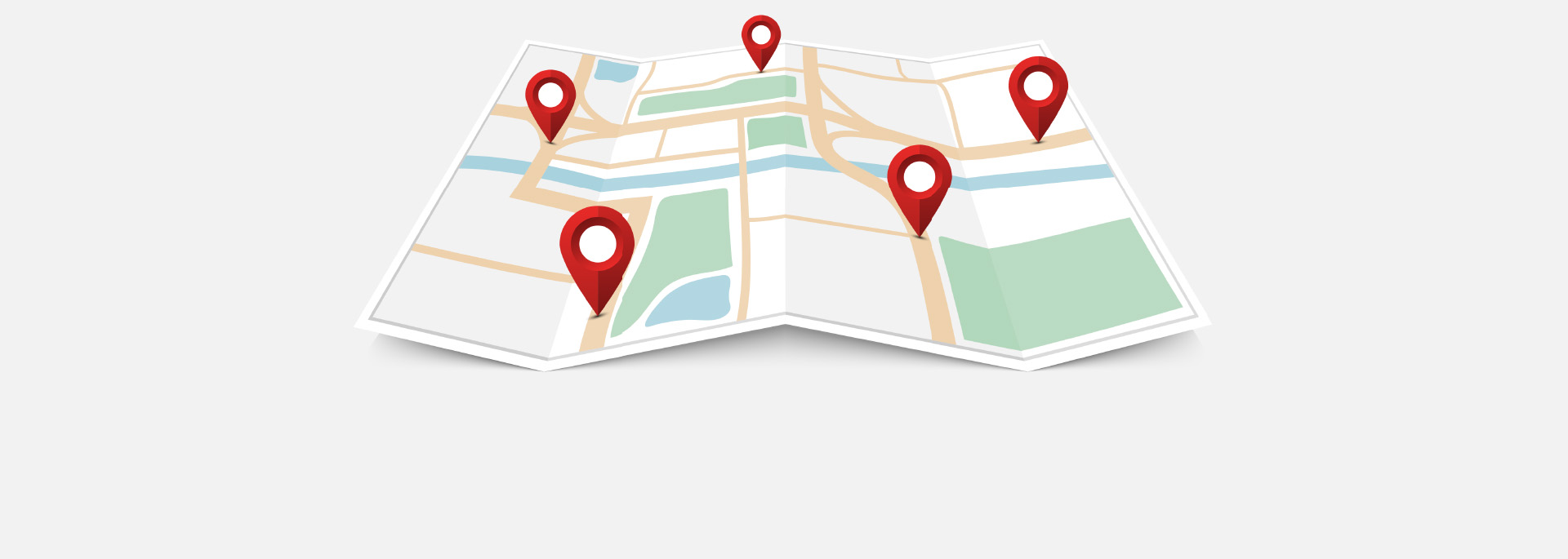
Today, the first interaction a potential customer has with your business usually happens online. Whether they’re searching on Google Maps, typing “near me” into a search bar, or clicking through a location-based ad, consumers rely on local search to guide their decisions.
That’s why local SEO isn’t just for small shops or brick-and-mortar storefronts — it’s a critical strategy for businesses of all sizes and industries. Whether you’re a single-location company looking to dominate your region or an enterprise scaling across multiple markets, local SEO ensures you’re visible when it matters most. Optimizing for local search helps you capture intent-driven traffic, build credibility, and scale efficiently in competitive spaces.
Local search engine optimization (SEO) includes everything from ranking in the Google Map Pack to showing up in organic “near me” results and voice searches. By applying best practices like Google Business Profile optimization, review management, and location-specific content, businesses can significantly improve their visibility and conversions.
Elevation Ten Thousand has deep experience helping brands integrate local SEO strategies that adapt to evolving algorithms and market demands. Below are the best practices we recommend for 2025 and beyond.
Why Local SEO Matters in a “Near Me” Search World
Let’s start with the basics and establish why local search even matters in the first place. As we hinted before, customers are incredibly likely to start their relationship with a business online through either direct search (e.g., “pizza near me”), map applications, or pop-up ads. Long gone are the days of using the phone book to find a number and address for a business. Instead, users take out their smartphones and search for options, and those searches trigger targeted ads.
For local businesses, the only way to ensure that a business name pops up on a customer’s search is to design an online presence to make sure that it does. Relevance alone is no longer the primary determining factor in which businesses potential customers see. It’s all about the search engine algorithm.
Optimize Your Google Business Profile for Maximum Impact
Although it may seem simple, one of the best and most effective ways to ensure that a business is found and the information is accurate starts with a Google Business Profile. If you don’t think your business has one, you are probably wrong. Google has made it a point to include as many businesses as they can gather into their maps and business systems, but they have no means to guarantee the data they have on these places is accurate. That’s where individual business input matters.
As a business, it is a key responsibility to claim a business’ page and then update and optimize it. This is both the simplest and most critical part of local SEO because Google Business Profiles are what appear first when local people are looking for businesses like yours. Optimizing a Google Business Profile is the first step in developing a strong local SEO strategy, and it involves a two-fold approach of ensuring accuracy and engagement as well as optimizing the content with high-yield elements like reviews, ratings, and reputation signals.
Build Local Citations and Directory Accuracy
Accuracy and consistency across online directories are vital for local SEO. Incorrect or outdated details about your business — such as hours, addresses, or services — can negatively impact rankings and customer trust.
A complete and optimized Google Business Profile should include:
- Business name (exact and consistent across all listings)
- Full address, including city and zip code
- Contact information (phone and email address)
- Website
- Business hours (with seasonal/holiday updates)
- Business category and attributes
- List of services or products offered
- Customer reviews and ratings
- Videos and photos that showcase the location, products, and services
- FAQs, including optimization around how to use Google’s question and answers
- Booking information or a link for service inquiries, if applicable
- Recent posts
Because Google Business Profiles are what appear during both maps searches and general searches for most users, spending time to make the profile complete, relevant, and accurate can be the single most effective way to drive local traffic (real and online) to a business. Consistency across other local directories, such as Yelp, Bing, Apple Maps, and industry-specific listings, further strengthens your authority in search.
Leverage Reviews, Ratings, and Reputation Signals
The purpose behind local SEO is to increase a business’ visibility in local search results. Just like regular SEO, this means speaking to the algorithms that help locate a webpage or Google Business Profile. In recent years, Google’s changing local algorithms have shifted to focus onto three main SEO measurements of a business: relevance, proximity, and prominence. The last of these, prominence, has led to changes in Google’s algorithm that focus on reviews and ratings, particularly within the Google universe, as one of the driving factors in elevating a site’s ranking.
Google measures prominence through four main factors related to reviews, which businesses can leverage to positively affect their local rankings:
- Keywords in Reviews: While less controllable, they help reinforce relevance.
- Volume of Reviews: Encourage satisfied customers to leave feedback.
- Average Star Rating: Strive for consistent quality to maintain a strong rating.
- Engagement with Reviews: Respond promptly and thoughtfully to demonstrate credibility and customer care.
Create Location-Based Content and Internal Linking Structure
Outside of Google Business Profiles, it is possible to increase local SEO rankings through other aspects of a business’ online presence, including adding location-based content to the website and utilizing an internal linking structure that is conducive to local SEO. These combined efforts, known as on-page SEO, have a strong impact on where the webpage ranks within search engines’ broad search (rather than maps) listings. This includes:
- Dedicated service or location pages for each area served
- Local guides, blogs, or resources that tie content to geography
- Internal linking structures that connect location-based pages together and back to core service pages
These on-page SEO tactics reinforce your relevance to specific regions and help capture organic traffic from local queries. Linking strategies also support broader SEO efforts like internal linking, ensuring authority flows across the site.
Track and Adjust Using Local SEO Analytics
Like any good digital marketing strategy, the best way to get the most out of local SEO is to track it and take steps to improve it. Businesses can use several key metrics with local SEO, including tracking local keyword rankings and using Google Analytics to monitor their Google Business Profile Insights, such as calls, directions, and website visits. They also want to monitor the volume, rating, and accuracy of online reviews and geographically track organic website traffic from local areas and conversion rates for leads or sales.
At Elevation Ten Thousand, our SEO services are built to strengthen visibility at every level — from local map packs to organic search rankings. With expertise in analytics, on-page optimization, and scalable strategies, we help businesses adapt to algorithm changes and achieve lasting growth.
Frequently Asked Questions
Do local SEO strategies differ for multi-location businesses?
Yes. Local SEO strategies for multi-location businesses often require additional considerations. Each location serves a unique market, which means every branch or office should have its own optimized Google Business Profile and, ideally, a dedicated landing page. In some cases, like businesses with multiple storefronts in the same metropolitan area, a single broader strategy may cover overlapping markets. But when locations are spread farther apart, treating each one individually is essential for visibility and relevance. These steps — optimizing profiles, building location-specific pages, and linking them back into the main website — form a standard part of an effective multi-location SEO strategy.
How often should I update my Google Business Profile?
It’s best to log in and review your Google Business Profile at least once a month to confirm accuracy. Any time key information changes — such as business hours, services, or contact details — update it right away. Posting updates, photos, and offers more frequently can also improve visibility by signaling to Google that your business is active and relevant.
What’s the role of schema markup in local SEO?
Schema markup, also known as structured data markup, is a behind-the-scenes way to enhance local SEO by making a business more visible to both traditional search as well as AI search engines. The purpose of schema markup is to provide additional information about a business that search engines and AI can “read” and then use to better portray the business. It does this by using a predictable structure and standard vocabulary that is easier for algorithms to crawl and understand, thus increasing the site’s ranking and relevance.
What are the biggest local SEO mistakes businesses make?
One of the most common mistakes is neglecting Google Business Profiles — leaving outdated information, failing to respond to reviews, or not posting updates. But local SEO errors go beyond GBP. Businesses often struggle with inconsistent NAP (name, address, phone number) details across directories, thin or duplicate location pages, and a lack of locally relevant content. Skipping technical elements like schema markup or ignoring analytics and performance tracking can also prevent businesses from understanding what’s working and what isn’t. Together, these mistakes limit visibility and weaken customer trust in local search.
Can local SEO help service-area businesses without a physical storefront?
Absolutely. Service-area businesses can still rank in local searches by defining service regions in their Google Business Profile and creating city- or region-specific landing pages. Optimizing content with local keywords and reviews from customers in those areas also helps build credibility and visibility, even without a physical storefront.